

Dull top coats, peeling or a top coat that splits?
How to recognise and solve the most common problems. By Sophie Devlieger - founder of Abstract Professional Products
“As a nail technician, there’s only one thing you want: a result that cures perfectly, has a beautiful shine and lasts. Yet I regularly receive the same questions: a dull top coat, a layer that peels off, or a top coat that splits from another product. Nine times out of ten, the problem isn’t the product itself, but a small detail in the application process. In this blog, I’ll take you through the most common issues so that you can recognise and solve them yourself.”
The three most common issues
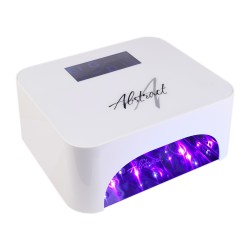
- Dull top coats: A dull top coat is almost always related to curing: the hand is too far away from the lamp or isn’t placed far enough inside it. Position the hand as close as possible to the bottom of the lamp and make sure every finger is properly positioned underneath the light source.
- Peeling after application: This usually occurs when filing is done after the top coat has already been applied. This disrupts the layered structure and causes the layer to lose adhesion. A cleansed surface that is still too smooth can also cause peeling. After filing, use a buffer and/or cleanse the surface again. If you skip this step, peeling is almost guaranteed.
- Quickly becoming dull: Does the shine disappear quickly? The layer has probably not cured sufficiently, or the lamp is no longer performing optimally. Lamps gradually lose power, so check them regularly.
Checked everything and still experiencing a problem? Leave a comment and include the batch code. This allows us to investigate the issue more specifically.
When the top coat splits from another product
A top gel that splits from the sticky layer of another product is a problem that occurs regularly. There are three possible causes:
- There is too much sticky layer remaining: This happens when a layer hasn’t been cured for long enough or when the lamp is no longer powerful enough. The solution? Respect a curing time of 60 seconds. Has your lamp been in use for a while? Cure for slightly longer than the standard curing time.
- An acrylate family with a different type of sticky layer: Not every product has the same chemical composition in its sticky layer, which can cause the top gel to react differently. The solution? Remove the layer with a dry sponge. Working with builders? Cleanse and file/buff first.
- Residue from the pigment carrier when using Chrome: Sometimes the cause is the use of Chrome, where residue from the pigment carrier has ended up in the bottle. This carrier is naturally slightly oily, which can contribute to the product pulling away.
The golden rule: never combine bottles
Top gels that remain in the bottle for too long can pick up part of the sticky layer. The result? A non-sticky top coat that suddenly isn’t non-sticky anymore, and certainly isn’t shiny.
Sofie’s golden rule: never pour top gel from one bottle into another. This is the most common cause of the problem described above and is therefore easy to avoid.
Any questions?
Still experiencing an issue? Don’t hesitate to get in touch! Leave a comment with the batch code of your product. We’ll work together to find a solution.
Related Products






Leave a Comment